


How to Stop a Noisy Range Hood Wall Cap in Windy Weather

Quick Summary
A noisy range hood cap in windy weather is usually caused by gusts moving the damper or exterior vent flap, which rattles or bangs when it can't stay shut. The fastest fixes are tightening any loose cap parts, adding small weights or magnets to the damper (without blocking it from closing), and sealing gaps where the cap meets the duct. If the noise continues, a spring-loaded damper or a wind-resistant wall cap should solve it.
Skip to the Good Stuff:
Understanding the Cause of Noise

Why does my range hood vent make noise when it's windy?
The noise from your range hood cap or kitchen wall cap during windy conditions usually comes from the movement of the damper or external vent flaps. These parts are designed to open when the range hood is in use and close when it's not. However, strong winds can cause them to rattle or bang shut repeatedly.
Noticing cold air coming down your vent too? Here’s what may be happening and how to fix it.
Inspecting the Range Hood Cap

Pinpoint the problem by taking a look at the hoods installation points.
It’s a good idea to inspect the range hood cap to get a better idea of the problem. Safety first: ensure your range hood is turned off before inspection. Then, perform a visual inspection. Look for any signs of damage or wear and tear on the cap and damper. Sometimes, replacing a worn-out cap can solve the noise issue.
Implementing Solutions
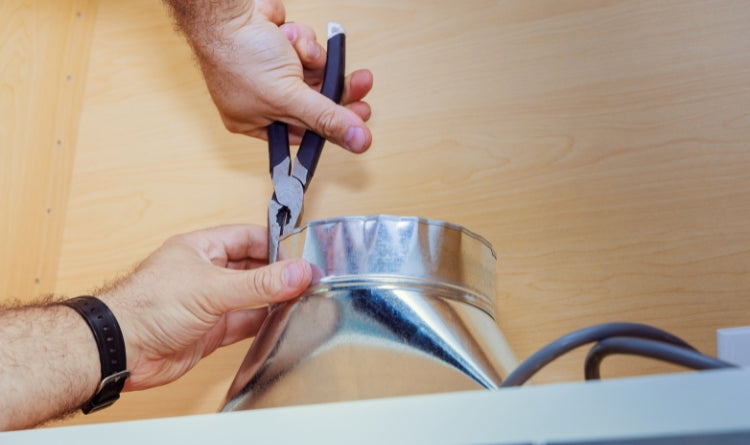
How to stop air vent flapping in wind?
- Tighten Loose Parts: Check if any components of the hood cap are loose. Tightening screws and securing loose parts can reduce rattling.
- Adding Weight: Adding weight to the damper can prevent it from flapping in the wind. This can be done by attaching small weights or magnets, but ensure they don’t obstruct the closing mechanism.
- Spring-Loaded Dampers: Consider upgrading to a spring-loaded damper. These dampers are better at staying shut in windy conditions, reducing the chances of noise.
- Wind Deflection Add-ons: Install wind deflection accessories designed to reduce the impact of wind on the cap.
- Sealing Gaps: Make sure there are no gaps around the cap where it meets the duct. Sealing these gaps can prevent additional wind from entering and causing noise.
- Upgrading the Wall Cap: If the current cap is old or not wind-resistant, consider replacing it with a model specifically designed to withstand strong winds.
Other Professional Solutions

If you can’t fix the problem yourself, it’s a good idea to consult with a ventilation specialist.
They can offer professional solutions, which might include installing a different type of vent cap or modifying your existing system.
Keep in mind that regular maintenance of your range hood and vent system can prevent many issues, including noise. Having a professional check your system annually can catch any potential problems early.
If you’re experiencing ongoing issues with your range hood or considering an upgrade, explore Hauslane’s quiet and efficient range hoods. Check out our products for a peaceful and well-ventilated kitchen experience (regardless of the weather outside).
Related Posts


